The Big Bad Wolf
Seminary was the big bad wolf. It was scary and imposing.

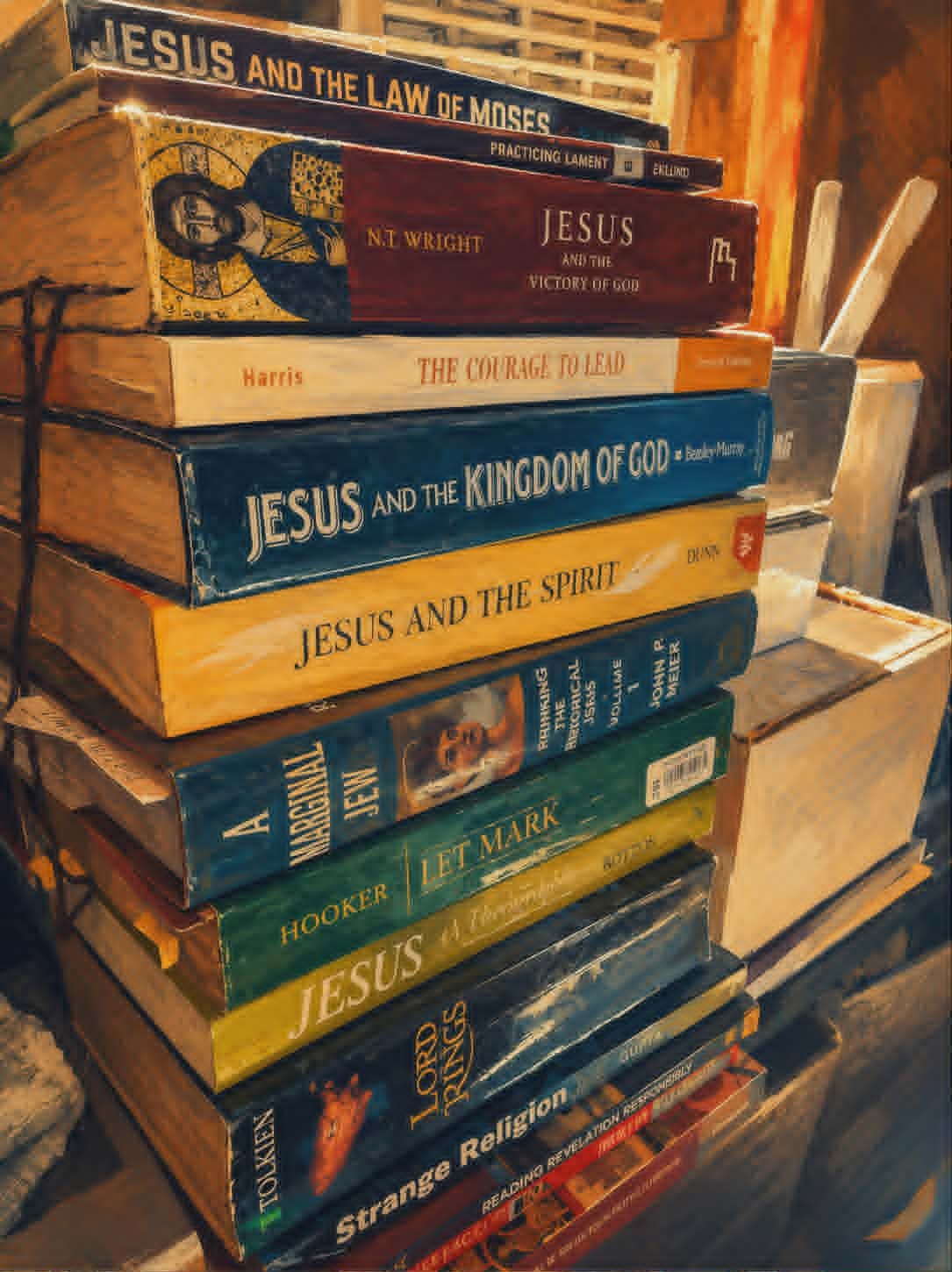
This week marks the final week of seminary (for now, at least). I am extremely thrilled, a little sad, and utterly amazed. Going to seminary is something I never conceived of, and even when I started, I wasn’t sure how long or how far I’d make it.
Seminary was the big bad wolf. It was scary and imposing.
Growing up, I heard all kinds of impressions about it. I heard that it was extremely difficult. I heard that people changed or even lost their faith in God. Some people were able to go and succeed, while others went as far as they could before something caused them to stop. As I grew older, I saw some of these stories become reality.
When Seminary Shakes Faith
A friend of mine went to seminary, and it changed him drastically. He went in as a Christian, believing in God and Jesus, and along the way he began sharing his journey and the things he was learning on Facebook.
After a while, he started posting about ideas he was wrestling with and asking friends and family for clarification and guidance. Over time, those posts evolved into discussions about things he viewed as contradictory, and eventually into criticism of the Bible itself.
The questions and topics he raised were far over my head, and I was saddened that I couldn’t help answer them or bring any clarity. In the end, his experience fed into the narrative I already had about seminary.
There was also the reality of these institutions being predominantly white. It was understood in my church, which I’ve since learned is often referred to as The Black Church, that one of the challenges of seminary, beyond having your faith tested, was navigating subtle and overt forms of racism.
That reality became part of my perception of seminary long before I ever set foot in a classroom.
The Seminary That Ended a Neighborhood Bible Study
Another impression of seminary came from my experience with a very well-known seminary in Chicago, which I’ll refer to as Scoody.
When I was young, my grandmother held a midweek Bible study for the children in her neighborhood. She talked to other parents and invited them to send their children, and over time it became quite popular. Eventually, students from Scoody would come and teach Bible lessons as well. My aunts and uncles also taught.
At the end of each lesson, everyone received a bag of candy. All of my cousins, including me, helped make those candy bags. It was a big operation because of the number of children who attended.
After several years, the midweek Bible class ended. When I asked why, I was told that someone at Scoody had concerns about there being only one entrance and exit to my grandparents’ basement and that someone from the city might be called.
Eventually, the class was moved outside, but that only worked during the summer months when there was no rain. In time, the ministry faded away, thanks in large part to the seminary.
Answering the Call Despite the Fear
So I had a lot of negative impressions about seminary. Yet it was still known as a place where people could go deeper into biblical study than what was typically available at church.
When I was discerning my call into ministry, I prayed and asked God what I should do and whether I should pursue seminary. God answered my prayer by directing me to a seminary I had never heard of. Looking back, I realized I had driven past it several times without knowing what it was.
At that point in my Christian journey, I had many questions about the Bible and its stories. I wanted answers, and I was willing to face the uncertainty in order to find them.
Questions That Led Me to Seminary
One of the questions I had was simple: What’s the best translation of the Bible to use?
Growing up, the King James Version was the only version I knew. When the NIV became available, it was a huge deal. The New King James Version was the next translation I encountered, and it seemed even better because of its similarity to the KJV.
At that time, I assumed the KJV was the first Bible. Yet I also knew it couldn’t have existed during the first thousand years after Jesus. That realization led to another question: How did Christianity survive before the KJV came along?
I wondered why Christianity looked the way it does today. Why aren’t we all Baptists or Catholics? Should we be? Is there one denomination that is right? Why are there so many?
Wrestling With History and Scripture
I had learned that Christianity was used to subdue and oppress Africans who had been captured and forced into slavery. I learned that enslaved people were given versions of the Bible with certain passages removed to create the impression that slavery was sanctioned by God.
Yet the story of Exodus is about God delivering Israel from slavery.
I wanted to know more.
Then there was the Book of Jude, which references events not found elsewhere in Scripture. There was the Book of Revelation and the rapture, which I first learned about through reading the Left Behind series. If an entire book series had been written about it, I assumed there must be a massive section of Scripture devoted to the topic.
I was curious about angels and demons. I wanted to know what happens after death.
These questions, and many others, pushed me beyond my fears about seminary.
Looking Back From the Finish Line
Fast-forward to today.
I entered seminary in 2022 at a time when my life felt nearly upside down, and now I am only a week away from graduation.
I can honestly say that most of my questions have been answered, and I’ve gained many more. The difference is that now I have a stronger foundation for researching and pursuing those answers. Seminary answers questions, but it also leaves you with new ones. That comes with the territory of learning.
I’ve learned about the history of Christianity and how it has survived to this day. I’ve learned about the proliferation of denominations and how the KJV came to be. I’ve learned about the Hebrew Bible, the Greek New Testament, and the Septuagint.
I have encountered racism, but I have also encountered many kind and welcoming people from all walks of life.
I’ve learned that Christianity spread around the globe long before the Trans-Atlantic slave trade and that, although it was later used as a tool of oppression, Christianity came to parts of Africa more than a thousand years before slave traders arrived.
Additionally, I know that I want to pastor a church someday.
At first, I wasn’t sure. But now I know.
I’m not entirely sure what that path will look like, but I do feel that God is preparing me for pastoral ministry at some point in the future.
Mountains, Milestones, and New Beginnings
These are only some of the things I’ve learned, but there is much more.
Perhaps the greatest lesson I’ve learned is that God will be with me through things that seem too difficult or inconceivable for me to accomplish on my own.
From my first fifteen-page paper to writing a thesis, God has helped me climb these mountains.
Before seminary, I rarely read anything besides technical documentation, and I wrote little beyond software code. Now I read books regularly and write papers, articles, and blogs.
My seminary experience has put me back into the mindset of being a student, with my brain feeling like putty at times. Surprisingly, I am sad about the prospect of finishing this degree program. At the same time, I find myself considering the possibility of beginning another one.
Seminary has been a life-changing experience. It has opened an entirely new world of biblical and historical study, curiosity, and discovery that I look forward to exploring for years to come.
Fellow computer nerd turned theology nerd here. Great article!
I'm glad I got to do seminary with you!